

BGP Hijacking and Route Leaks: Why We Keep Saying the Same Thing
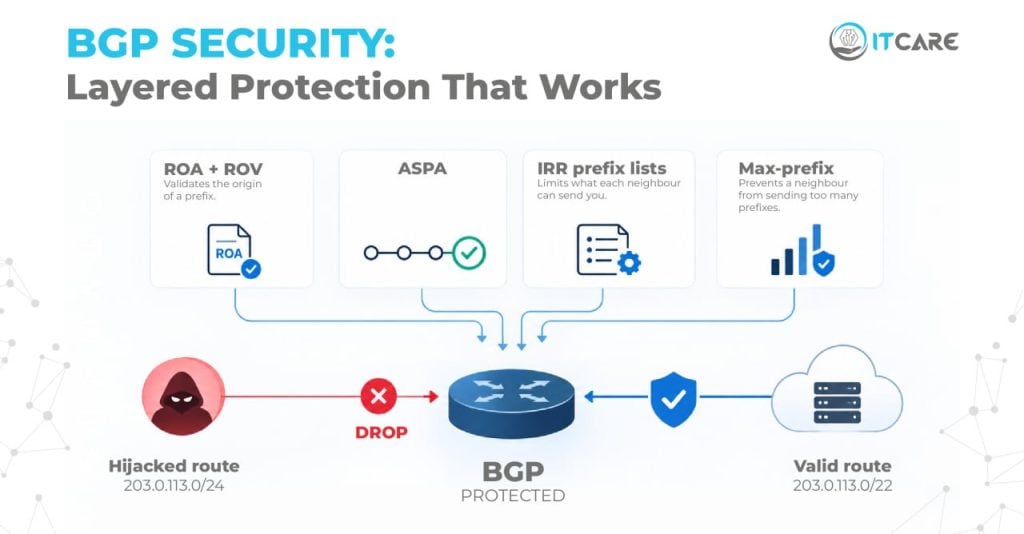
BGP Hijacking and Route Leaks: Why We Keep Saying the Same Thing Yes, we are repeating ourselves. On purpose. Every route leak and hijack that makes the news is a reminder that most of the protection is free, and most of it is still not deployed. So we will keep saying it until it is. […]
BGP PIC vs ECMP: What Your Backup Paths Cost the Forwarding Chip
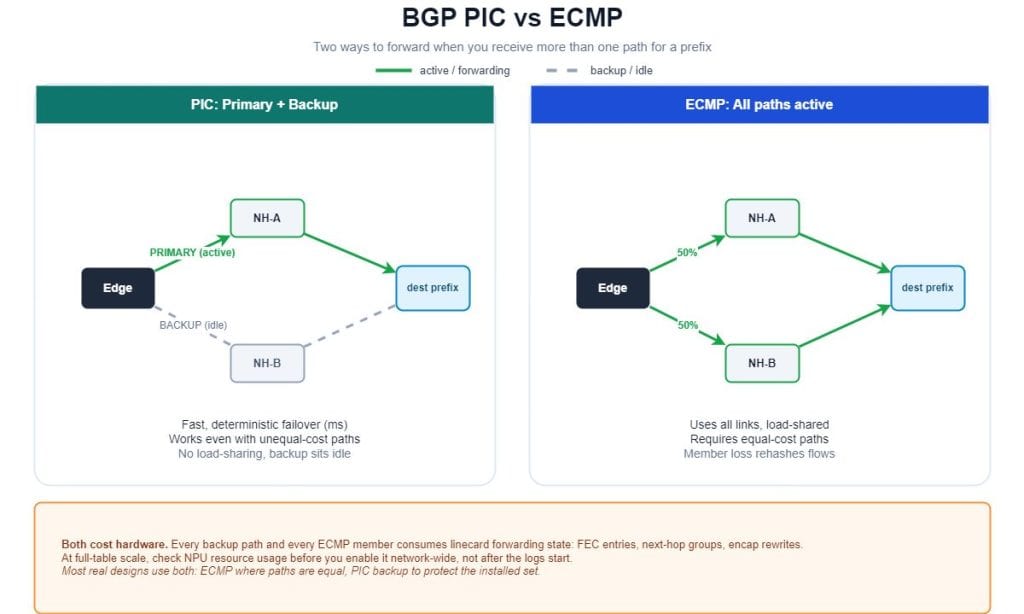
BGP PIC vs ECMP: What Your Backup Paths Cost the Forwarding Chip Everyone enables backup paths and ECMP for resilience. Almost nobody checks what it costs the forwarding chip until the logs start screaming We recently watched a Jericho-based edge run out of egress encap space. Label-imposition rewrites plus BGP backup paths pinned a hardware […]
The NOC staffing math problem: why one 24/7 seat takes 6 to 7 engineers
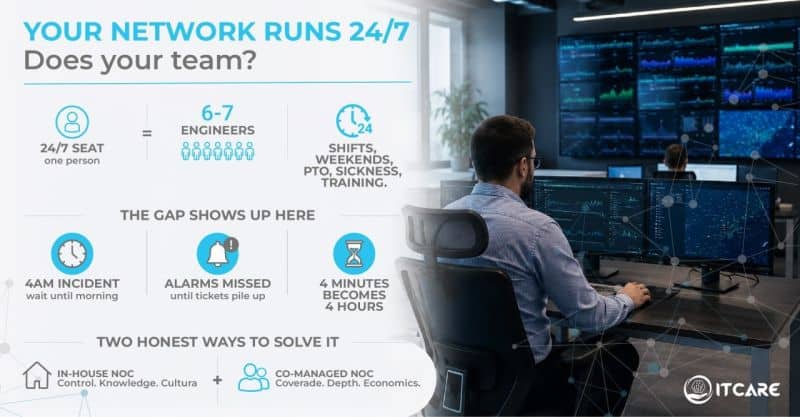
The NOC staffing math problem: why one 24/7 seat takes 6 to 7 engineers Most operators do not have a NOC problem. They have a NOC math problem. A single 24/7 seat, one person watching your network at every hour of every day, is not one hire. Once you account for shifts, weekends, PTO, sickness […]
Network Consulting Services vs Hiring a Network Architect
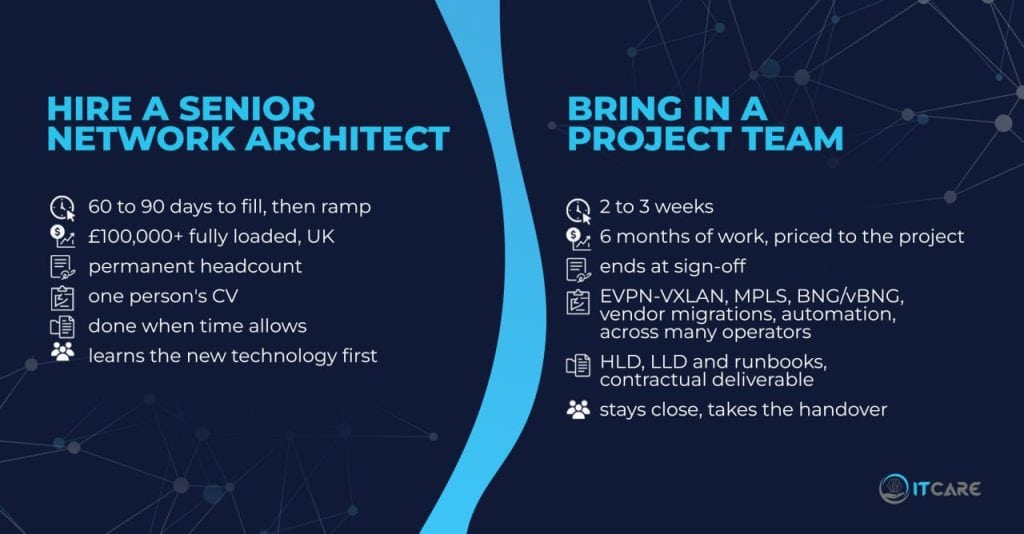
Network Consulting Services vs Hiring a Network Architect A 6-month network project is being discussed internally. Core refresh, a new BGP edge, and the EVPN fabric in the data center that has been postponed for 3 years running. It needs a senior architect you do not have. Two ways to get one. Hire. ITJobsWatch puts […]
NOC vs Service Desk: Why the Handover Is the Most Expensive Part of an Outage
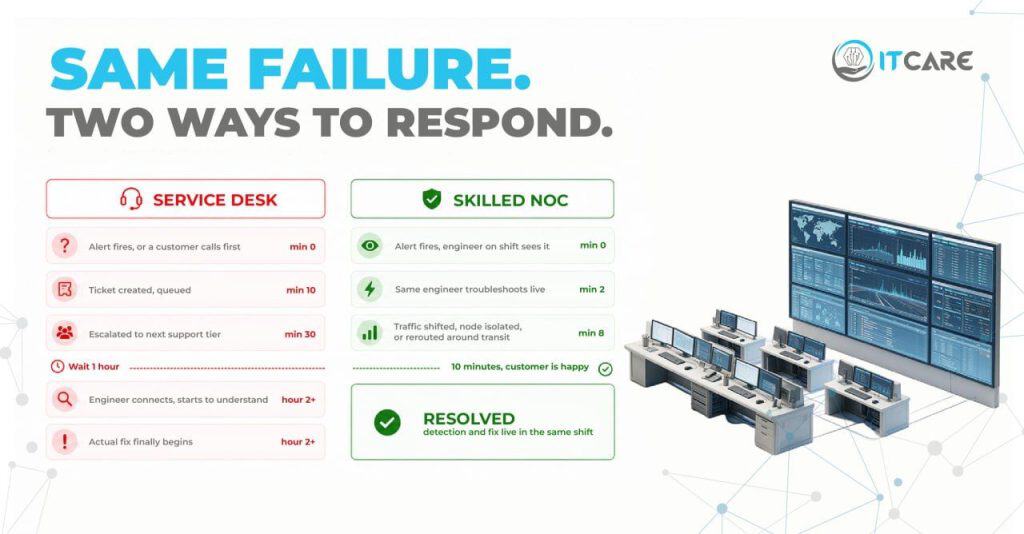
NOC vs Service Desk: Why the Handover Is the Most Expensive Part of an Outage The most expensive part of an outage is rarely the failure. It is the time between detection and the first person who can actually fix it. Redundancy does not save you from everything. Some failures never trigger the fallback: […]
Inside the PAXIO Network Redesign: One BGP Design, Zero Outage
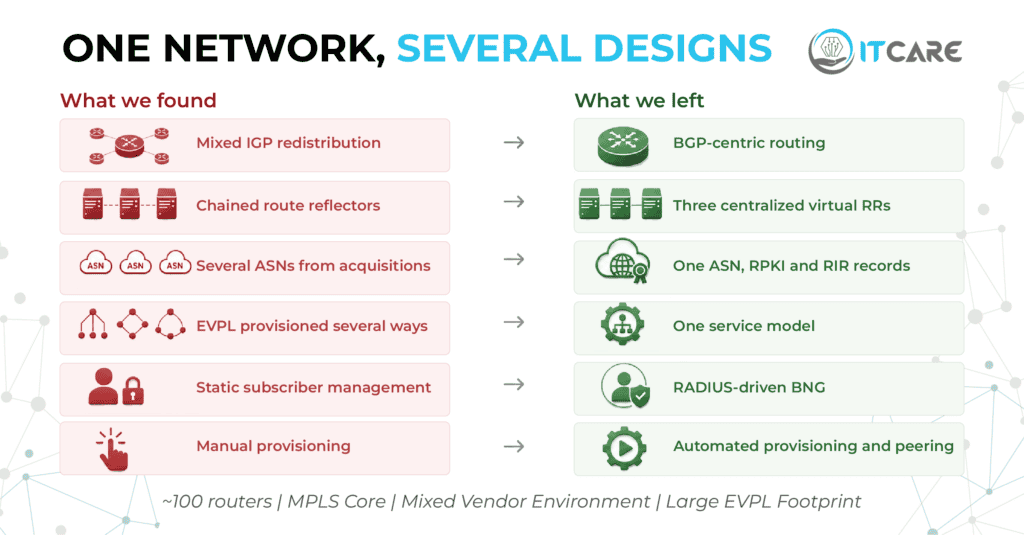
Inside the PAXIO Network Redesign: One BGP Design, Zero Outage Some networks are designed. Others accumulate. PAXIO ran business fiber in the Bay Area, and their network had grown the way a lot of provider networks grow, through acquisitions. Around 100 routers in the MPLS core, a mixed vendor environment, and a large EVPL footprint […]
Nobody pushes a config change at 17:00 on a Friday twice.
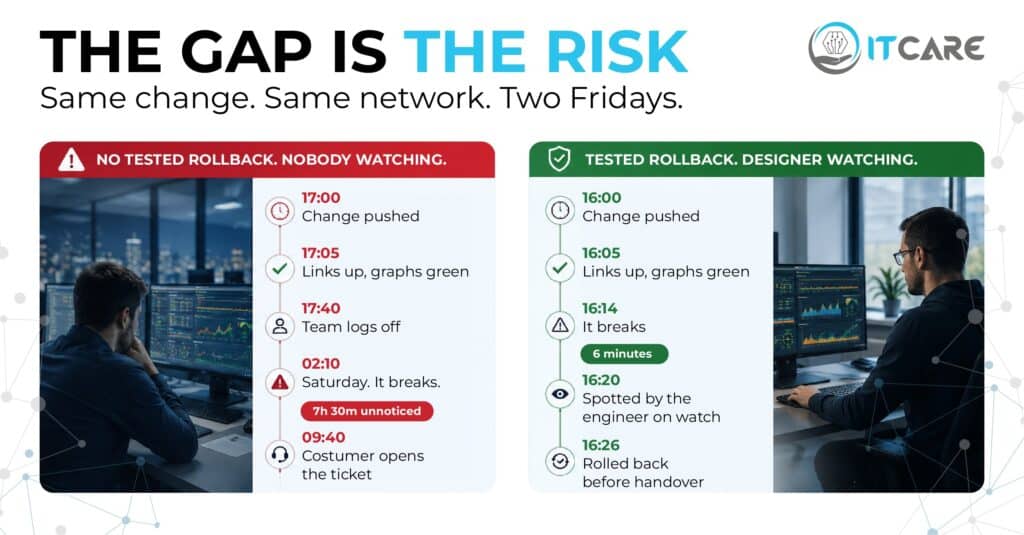
Nobody pushes a config change at 17:00 on a Friday twice Nobody pushes a config change at 17:00 on a Friday twice. The first time teaches you everything you need to know. The link comes up, the BGP session comes up, the graphs look clean, and then somewhere around Saturday morning a customer opens a […]
“Call everyone” is not an escalation policy.
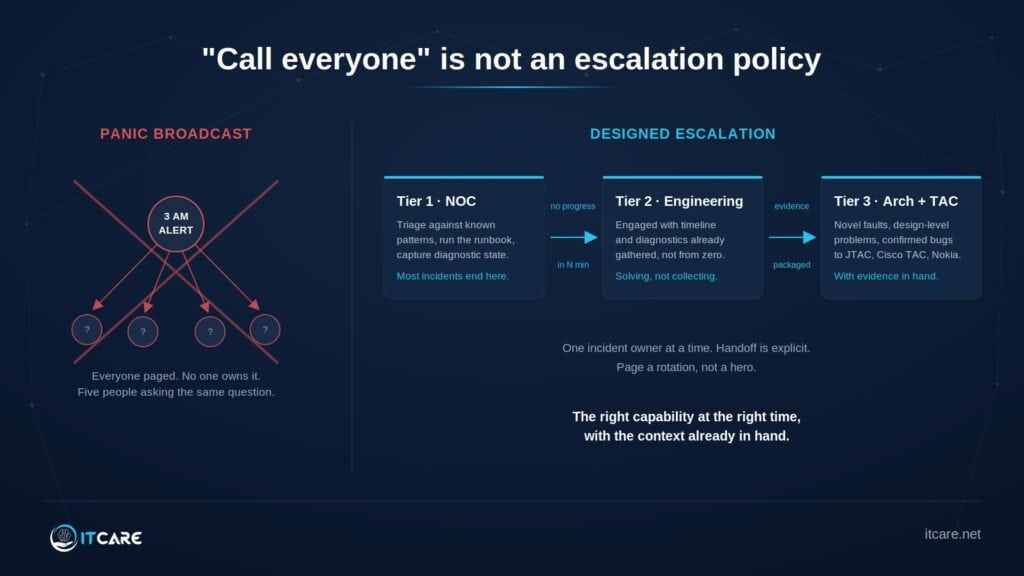
“Call everyone” is not an escalation policy. When something breaks at 3am and the response is to page the whole team onto a bridge, that is not escalation. It is a panic broadcast. An incident escalation process is a designed system, and this is what happens when nobody designs it. The failure modes are predictable: […]
MONITORING SYSTEMS PROBLEM
MONITORING SYSTEMS PROBLEM The number one problem we find when we onboard a new network is not the routing. It is the monitoring. Most conversations about network monitoring best practices start with tool selection. Ours starts somewhere else, because the tool is almost never the problem. At first glance every setup looks fine. Someone spun […]
OUTSOURCED NETWORK MONITORING: WEEK-ONE CHECKLIST
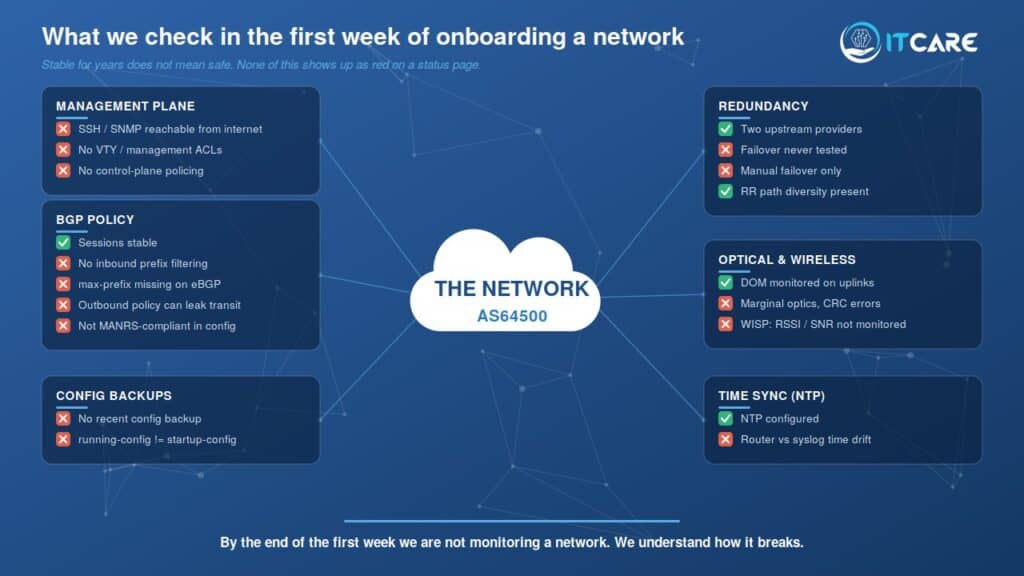
OUTSOURCED NETWORK MONITORING: WEEK-ONE CHECKLIST A network that has been stable for three years is not one we trust yet. Stable often just means nobody has touched the part that is quietly broken. That assumption shapes how we run every outsourced network monitoring engagement. When we take over monitoring for a new ISP, data center, […]