FROM SOURCE OF TRUTH TO NETWORK ORCHESTRATOR
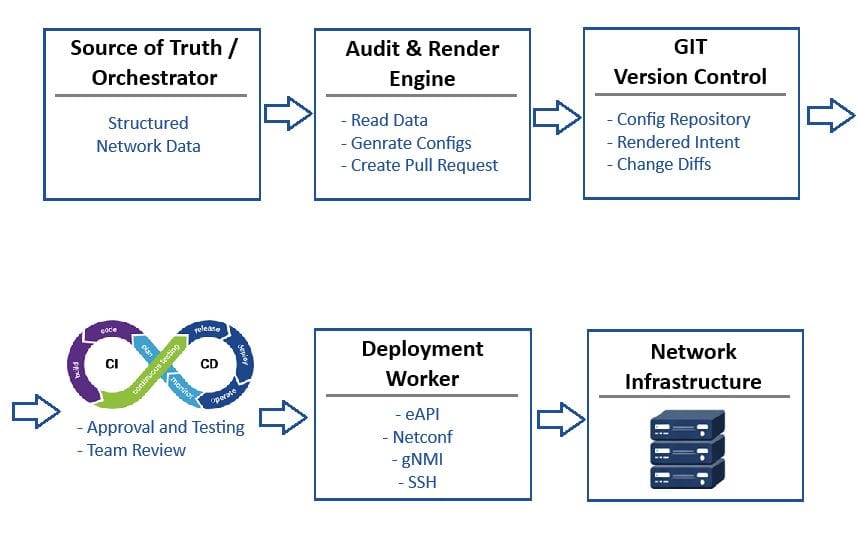
I want to share a recently completed project that, for me, is a very good example of how network automation should actually look in production. At ITcare, we built a full automation framework around an Arista Networks IP fabric architecture for a customer operating POPs around the world, with a clear goal in mind: NetBox should not just document the network, but actively drive it, evolving from a classic source of truth into a true network orchestrator.
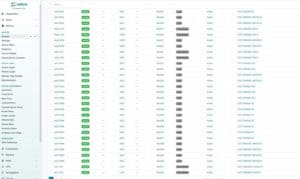
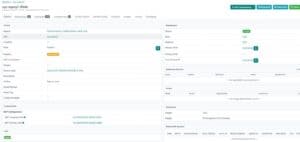
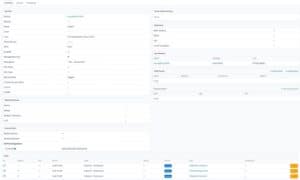
NetBox Labs became the source for devices, interfaces, IPs, VLANs, VRFs, VNIs, Cabling, BGP, and Routing Policies. On top of that, we extended it with custom logic for underlay and overlay ASN allocation, EVPN services, and fabric specific attributes. From that point forward, no configuration data lived outside the source of truth.
Based on NetBox data, we render full device configurations using Python and Jinja2. What lives in NetBox is translated directly into device configuration. Everything is derived from structured data, therefore there is no manual variable handling.
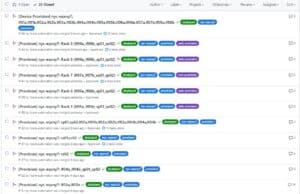
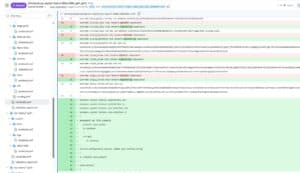
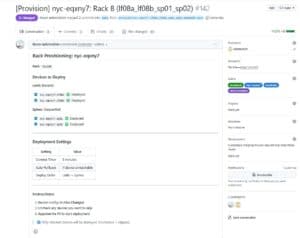
Change management is handled through Git. Every network change starts as a Pull Request. A CI pipeline renders candidate configurations, fetches running configurations from devices, generates diffs, and shows exactly what will change. Only approved changes are deployed, and only the required configuration delta is pushed to the network.
Deployment safety was a hard requirement from the start. We use Arista session management, combined with active connectivity checks before any change is confirmed. All configuration changes are enforced strictly through the automation pipeline, because direct modifications via the legacy configure terminal hierarchy are intentionally disallowed. This ensures that every change is traceable, reviewed, and reproducible.
What I like most about this approach is scalability. Adding a new rack, a new set of spines, or even deploying a new location becomes a controlled workflow. NetBox validates cabling, allocates resources, and provision the fabric with minimal human interaction. At the same time, the framework still supports custom configurations and exceptions without breaking the overall model.
This is not a lab or a proof of concept. It is running in production and it significantly reduced operational overhead while increasing safety and auditability.
Automation at this level is not about replacing engineers. It is about freeing them from repetitive work and letting systems enforce consistency. Big credit to Ruslan Bruma and his team, especially Ion Siretanu and Ilie Ursachila, for the hard work and commitment behind this implementation. This kind of automation only comes together when people care deeply about correctness, safety, and long term operability.