WHY TEAM COORDINATION MATTERS MORE THAN TOOLS DURING INCIDENTS
During critical incidents, the natural instinct is to think about tools. We have dashboards, alerts, observability systems, and automation. However, day to day operational reality often shows something different.
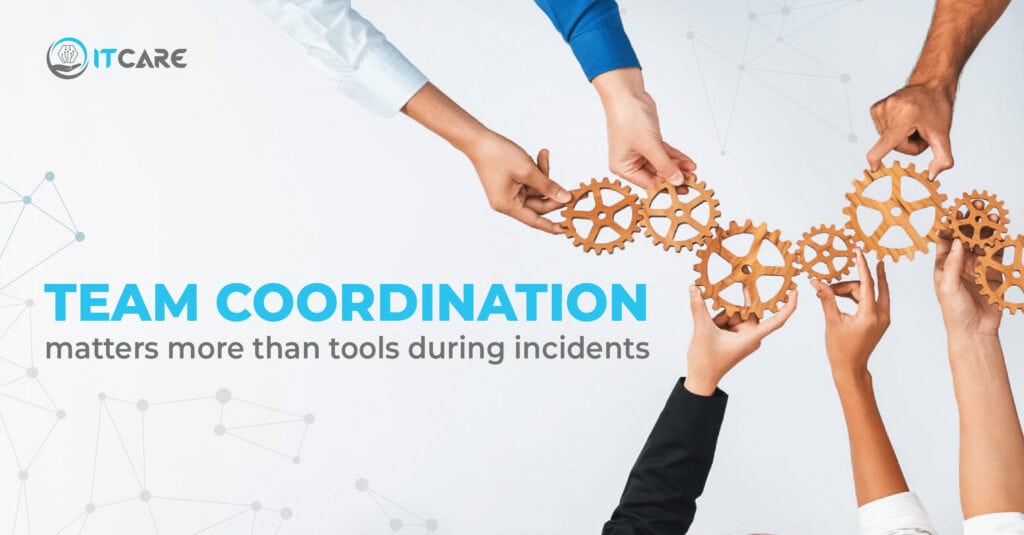
When services degrade and pressure rises, the decisive factor is rarely another tool. The real difference comes from how the team communicates, prioritizes, and synchronizes its actions. Excellent tooling combined with weak coordination frequently leads to parallel investigations, conflicting hypotheses, and unnecessary delays.
Effective coordination completely changes the dynamics of an incident. Information flows quickly. Roles become clear. Decisions are made based on shared context rather than isolated interpretations. Instead of individual engineers solving separate fragments, the team addresses the incident as a unified system.
In practice, most complex incidents are not constrained by lack of data. They are constrained by fragmented attention and the absence of a common reasoning thread. Therefore, processes, communication discipline, and operational culture become just as important as the technology itself.
Tools accelerate analysis. Well coordinated people accelerate resolution.
This remains one of the fundamental lessons of operating networks at real scale.