

AI SECURITY TOOLS AND THE MARKET REACTION
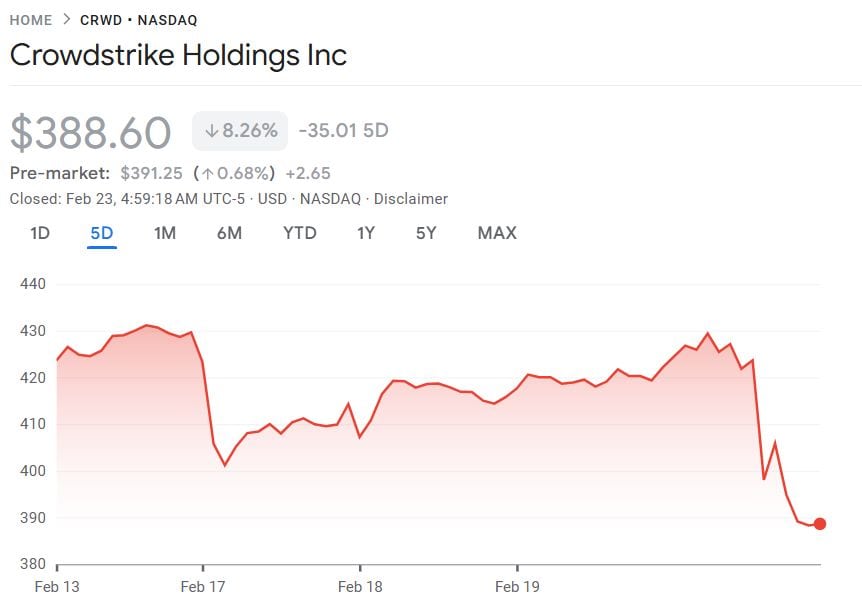
AI SECURITY TOOLS AND THE MARKET REACTION For days now, I have been watching a very interesting market reaction unfold. Anthropic’s recent launch of Claude Code Security (https://lnkd.in/dg9-datR), an AI powered code vulnerability scanner that suggests patches for human review, did not just make tech headlines. It triggered a sharp sell off across major cybersecurity […]
GROWING NEED FOR VENDOR NEUTRAL – ENGINEERING TRAINING
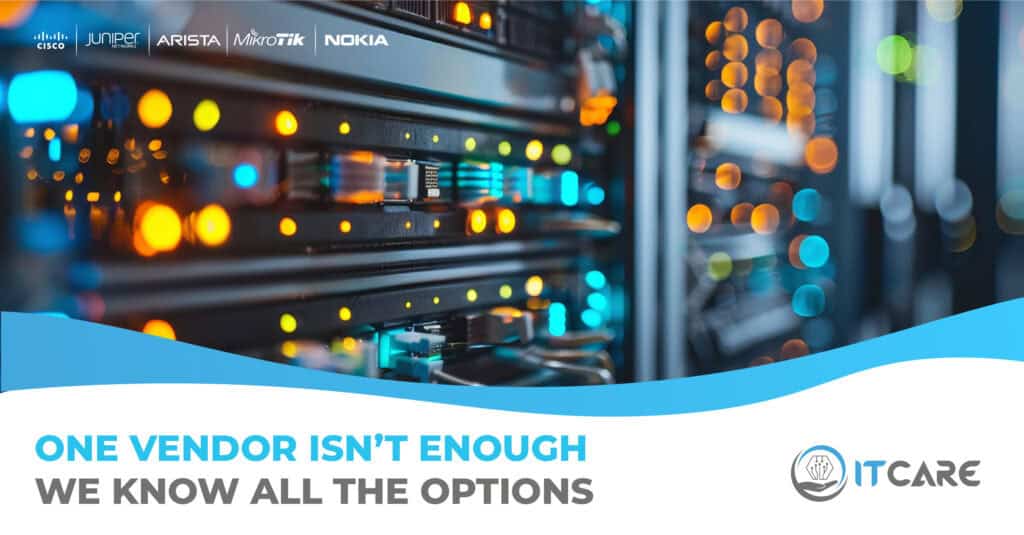
GROWING NEED FOR VENDOR NEUTRAL – ENGINEERING TRAINING Many networks today are no longer built around a single vendor. It is common to see Cisco in one part of the network, Juniper in another, Arista in the data center, Mikrotik at the edge, and Nokia in transport layers. Each vendor brings strengths, but this also creates a new […]
WHY TEAM COORDINATION MATTERS MORE THAN TOOLS DURING INCIDENTS
WHY TEAM COORDINATION MATTERS MORE THAN TOOLS DURING INCIDENTS During critical incidents, the natural instinct is to think about tools. We have dashboards, alerts, observability systems, and automation. However, day to day operational reality often shows something different. When services degrade and pressure rises, the decisive factor is rarely another tool. The real difference comes from how the team […]
AI-Assisted Incident Response: HORA at Upperside World Congress 2026
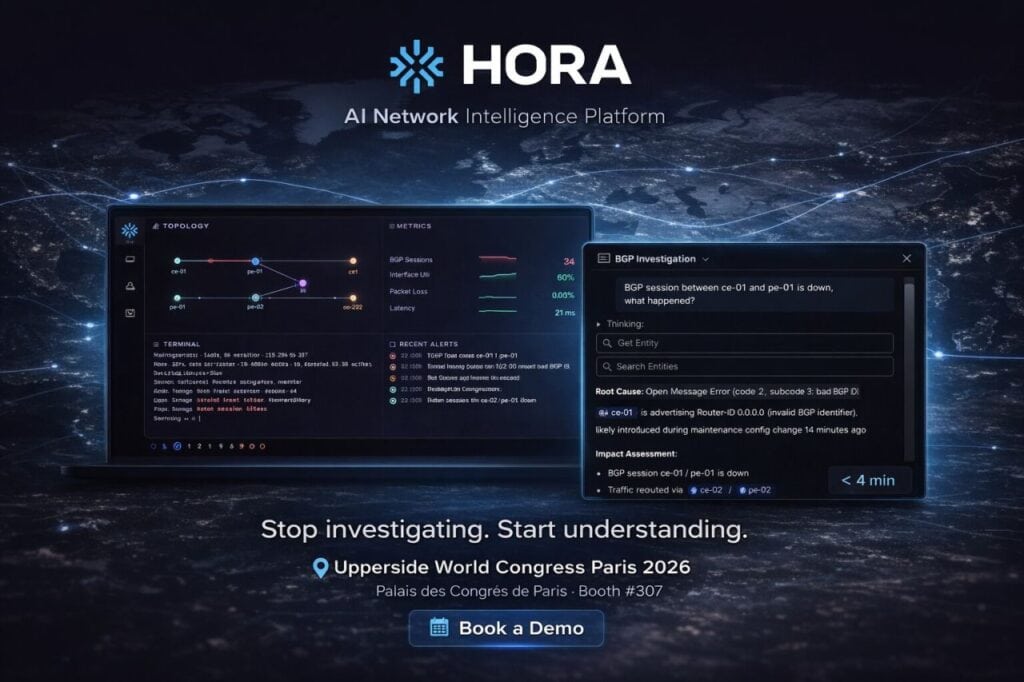
AI-Assisted Incident Response: HORA at Upperside World Congress 2026 At Upperside World Congress 2026 in Paris, Andrian Visnevschi (CEO and CTO) and Nicolai Moraru (Director of Software Engineering) took the main stage to present what we have been building at ITcare, and what we have learned along the way. The talk: AI-assisted incident response, and […]
CUSTOMERS WANT TO OUTSOURCE BUT KEEP HIGH SKILL ENGINEERS IN HOUSE
CUSTOMERS WANT TO OUTSOURCE BUT KEEP HIGH SKILL ENGINEERS IN HOUSE Many companies invest heavily in senior architects and experienced network engineers. These people are hired to design scalable architectures, plan growth, evaluate vendors, and improve long term reliability. Yet in many environments, those same architects end up clearing monitoring alerts, chasing routine tickets, and […]
WHAT ACTUALLY BREAKS IN IP FABRICS AT SCALE
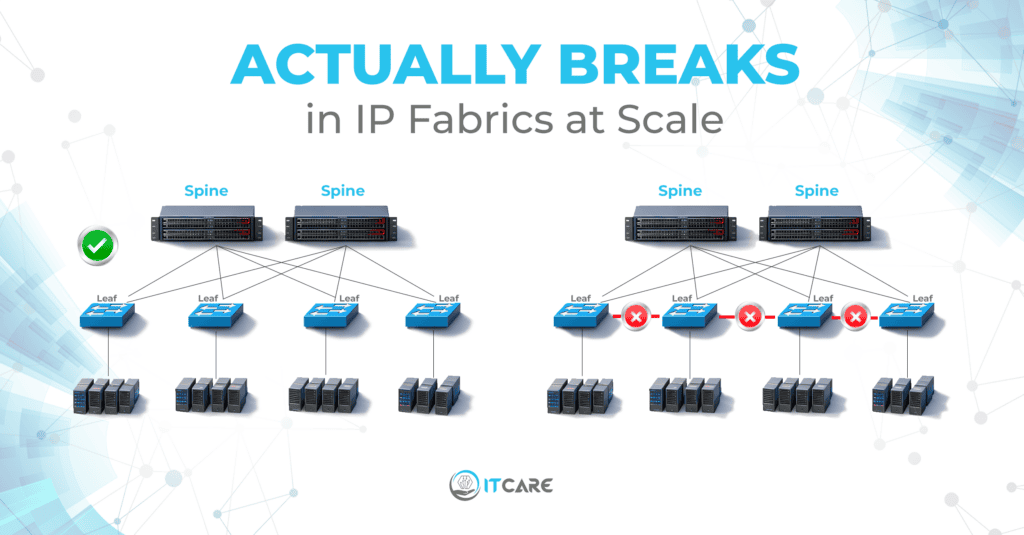
WHAT ACTUALLY BREAKS IN IP FABRICS AT SCALE When we start working with new customers, we often hear a familiar statement: “Our data center is built on a Spine Leaf IP Fabric.” However, once we perform a network assessment, reality sometimes looks different. A common pattern we encounter is the presence of direct links between […]
WE ARE NOW AN HPE PARTNER FOR PROFESSIONAL SERVICES AND SUPPORT SERVICES

WE ARE NOW AN HPE PARTNER FOR PROFESSIONAL SERVICES AND SUPPORT SERVICES We are pleased to announce that ITcare has officially become an HPE partner within the Professional Services Center and Support Services Center programs. This partnership strengthens our ability to deliver advanced technology services while building on Hewlett Packard Enterprise expertise, tools, and best […]
PROJECT DELIVERED: FROM LEGACY NETWORK TO AUTOMATED IP FABRIC
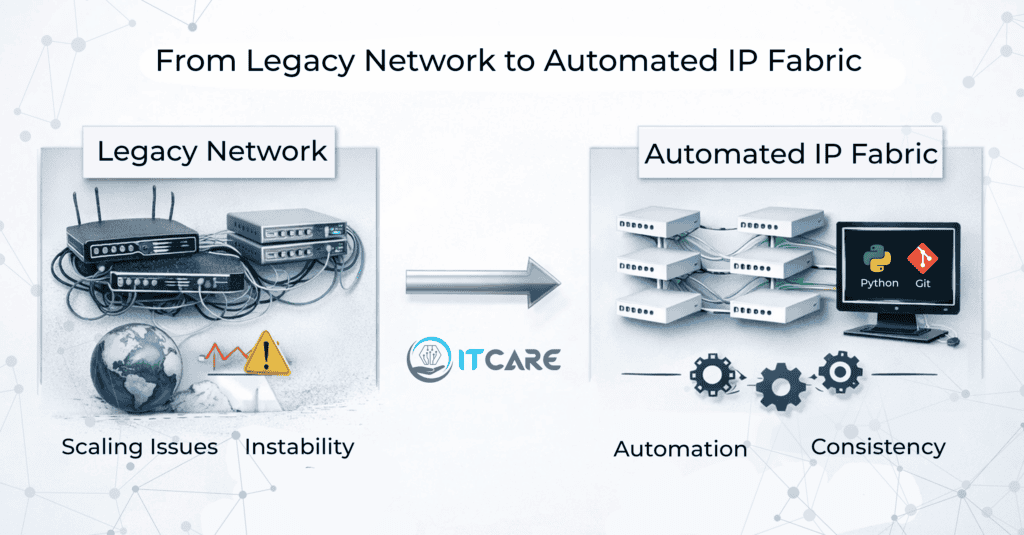
PROJECT DELIVERED: FROM LEGACY NETWORK TO AUTOMATED IP FABRIC At ITcare, we recently completed a network transformation project for a customer operating points of presence around the world. The engagement started with a challenge many growing networks face: the existing infrastructure was based on a legacy design that made scaling, consistency, and operational stability increasingly […]
MEET HORA: AI THAT FINDS NETWORK ROOT CAUSE IN UNDER 4 MINUTES
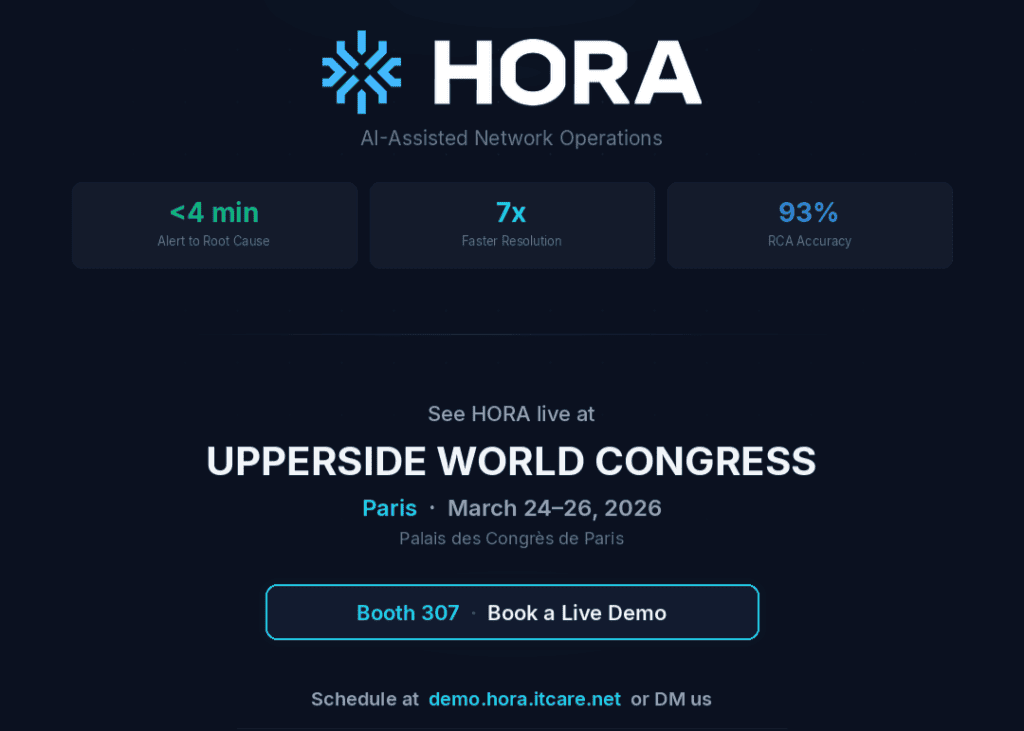
MEET HORA: AI THAT FINDS NETWORK ROOT CAUSE IN UNDER 4 MINUTES Why does it still take 15 to 60 minutes to find the root cause of a network incident? Because most investigations are still done sequentially. Engineers jump between monitoring systems, logs, routing tables, and telemetry, manually correlating data across multiple tools. At ITcare, we […]
WHAT CONFERENCES REALLY MEAN FOR ENGINEERING TEAMS
WHAT CONFERENCES REALLY MEAN FOR ENGINEERING TEAMS Industry conferences are often perceived as marketing events, networking opportunities, or simply scheduled gatherings around new technologies. While those elements certainly exist, their real value for engineering teams runs much deeper. Conferences compress experience. In just a few days, engineers are exposed to architectural patterns, operational lessons, failure […]