A PRACTICAL PATH TO OUTSOURCING WITHOUT UNNECESSARY RISK
For many organizations, outsourcing is no longer viewed as an all or nothing decision. Instead of transferring large operational responsibilities in a single step, teams increasingly prefer a gradual and controlled approach. This shift is driven by a simple concern. Large transitions introduce uncertainty, while smaller changes allow teams to evaluate real world results before expanding scope.
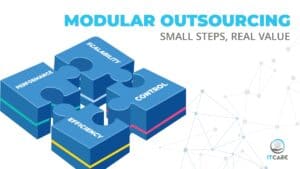
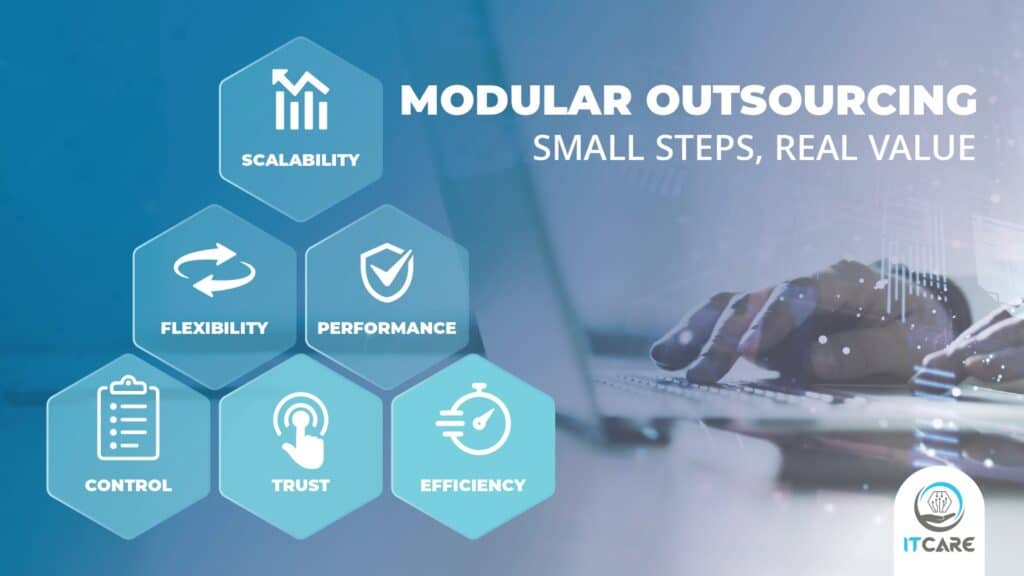
A modular engagement model directly supports this mindset. Rather than committing to a fully outsourced structure from the beginning, a company can start with a narrowly defined responsibility. For example, they may choose off hours monitoring, alert handling, or escalation support. Once the collaboration proves effective, additional functions such as change management, automation, or advanced engineering can be introduced. Each expansion is guided by observed performance, therefore decisions rely on evidence instead of assumptions.
This staged model also simplifies financial planning. Because services are introduced incrementally, spending can be evaluated alongside measurable outcomes. Response times, operational consistency, documentation quality, and overall stability improvements can be assessed at every stage. As a result, budgeting becomes more predictable and investment decisions become easier to justify internally.
Equally important, a modular approach creates space for trust and alignment. Internal teams retain visibility and control, while cooperation patterns develop naturally. Instead of forcing immediate organizational adaptation, both sides refine workflows through practical experience. Over time, the partnership evolves into an integrated operational model rather than a vendor relationship.
At ITcare, our service design follows this philosophy. Our Network Operations Center and engineering teams can begin with a focused operational role and expand as client environments mature. Because our processes, reporting structure, and operational methodology remain consistent, clients experience continuity even as responsibilities grow. This consistency reduces friction and eliminates the need for repeated transitions.
Outsourcing does not need to be perceived as a high risk transformation. When structured in a modular way, it becomes a sequence of informed decisions that progressively build operational resilience and long term partnership value.